 HEB
ZIM
BALI
STA
BALI
STA
We'd love to hear from you. Please provide your details and let us know how we can help. Our team will be in touch shortly.
Shivat Zion 36, Tel Aviv
+972 (0)52 584 0569
info@zimbalista.com
Thu: 11:00 AM - 4:00 PM
Fri-Sat: 10:00 AM - 1:00 PM
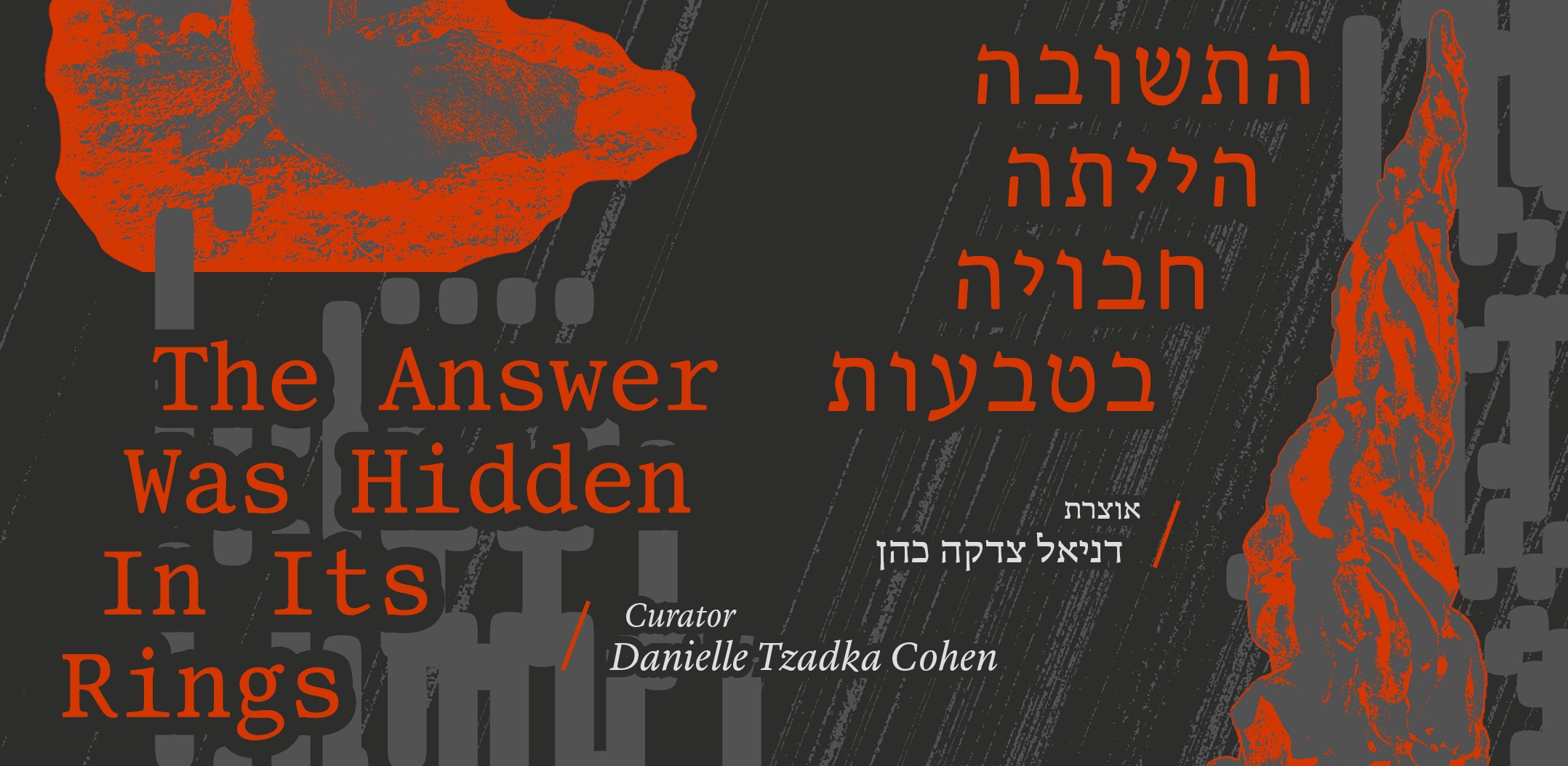
Curator: Danielle Tzadka Cohen
06/11/26-09/01/27
Ezra Orion, Asaf Elkalai, Karen Dolev, Noam Wenkert, Hava Mehutan, Tomer Sapir, Lior Tamim
Curator: Danielle Tzadka Cohen
Danielle Tzadka Cohen is the winner of the 2026 Ofra Zimbalista Prize for Contemporary Curatorship. The prize is awarded annually to a graduate of the MA program in Policy and Theory of the Arts at Bezalel Academy of Arts and Design, Jerusalem, to curate an exhibition at Zimbalista Gallery. The prize aims to give a platform to curators who engage critically with contemporary local art, and to promote in-depth, creative thinking in the Israeli art field. Tzadka Cohen holds a BFA in Multidisciplinary Art from Shenkar College and completed her MA in Policy and Theory of the Arts at Bezalel. Since 2021 she has served as deputy curator at the Petah Tikva Museum of Art.
The point of departure for the exhibition “The Answer Was Hidden in Its Rings” is the image of the planet Saturn, and the connections woven over the centuries between the position and movement of celestial bodies and human consciousness and history. The understanding that human existence is bound up in a symbolic order of cosmic bodies is present in various astrological, mystical and theological traditions, with each staging its own doctrine of divination. The exhibition examines the tension between the planet Saturn (Shabtai in Hebrew) and Sabbateanism as a messianic conception, and asks how forms born on the fringes of astrology, Kabbalah and mysticism seep into practical consciousness and become an everyday language of interpretation.
Sabbateanism, which originated in the messianic movement that formed around the figure of Sabbatai Zevi in the 17th century, has long since outgrown its historical bounds. Over the years the term became a pejorative for expressions of messianism promising imminent deliverance and a fundamental change in the world order. Alongside this, the exhibition turns to W.G. Sebald’s The Rings of Saturn and its image of the rings as a space of wandering among traces, ruins and accumulated memory. From the encounter between Sabbateanism and the image of Saturn’s rings arises the possibility of conceiving of the planet’s energetic mass as a looping movement in which the past returns to the present again and again, and the promise of deliverance persists even after it has failed.
The exhibition considers how fringe doctrines become charged with a force that sweeps people away, through mechanisms of enchantment, hypnosis and magnetic pull toward ideas of destiny and deliverance. Hypnosis figures here as a state of consciousness induced through repetition, in which an image or idea becomes the site of a persistent attraction. Within this gravitational field there also emerges the human need to crown kings and follow them in thrall, to place a single figure at the center of a shared faith and destiny. The longing for a messianic destiny and the anticipation of revelation feed the power of the image. Returning to the same signs and the same promise generates a cyclic motion, in which each new sign is read as confirmation of a faith that has already crystallized.
In the encounter between the planet Saturn and the beliefs, mysticism and images that orbit it, a poetics of attraction, repetition and anticipation of revelation takes shape. The exhibition seeks to contemplate this mesmerizing force, and the possibility of being drawn into the delicate, vortical movement between enchantment and devotion. Latent within this poetics is the possibility of escalation: the point at which the image ceases to be an object of contemplation and becomes an absolute truth through which reality is read.
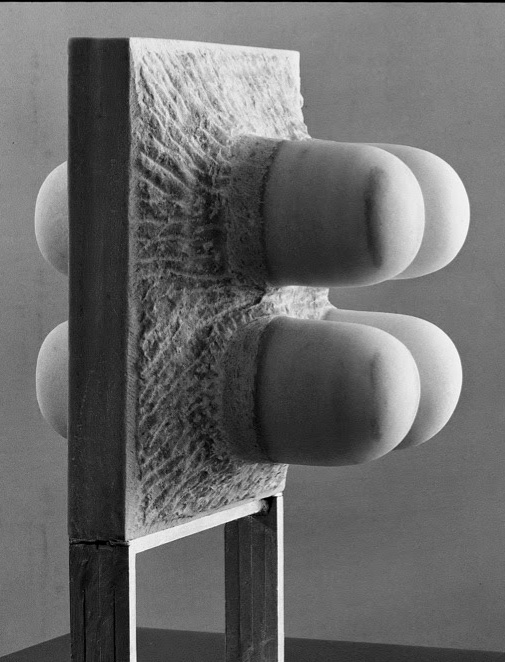
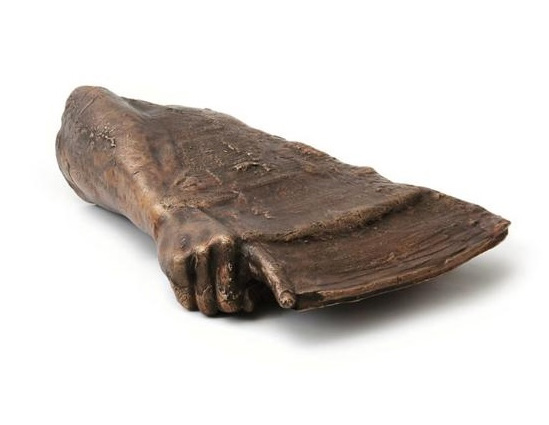
This trajectory finds varied expression in the works: in Karen Dolev’s, images of Saturn disperse into layers of light, color and matter; in Hava Mehutan’s, masses of marble and iron become “portents,” like planetary bodies on the cusp of an event. From behind Lior Tamim’s opaque tarpaulin, which resembles a darkened star chart, emerges an ASMR whisper narrating the formation of the world. In Asaf Elkalai’s work, the gesture of endless swiping across a screen freezes in bronze, becoming a kind of fossil of a contemporary act. Both works linger on daily operations of hypnosis and touch, and on the way they capture attention.
In Noam Wenkert’s painting Pogroms, bodies drawn together around fire and fear coalesce into a charged crowd, suspended in a moment that could as easily precede an eruption as follow one. It is a threshold at which faith in deliverance, or in a shared sense of destiny, can tip into collective abandon. In Tomer Sapir’s video Something Happened to Us, Dad, digital glitches warp the children’s faces, unsettling the familiar and summoning a plea for help addressed to the father, the figure expected to restore order and meaning to a world that has shifted.
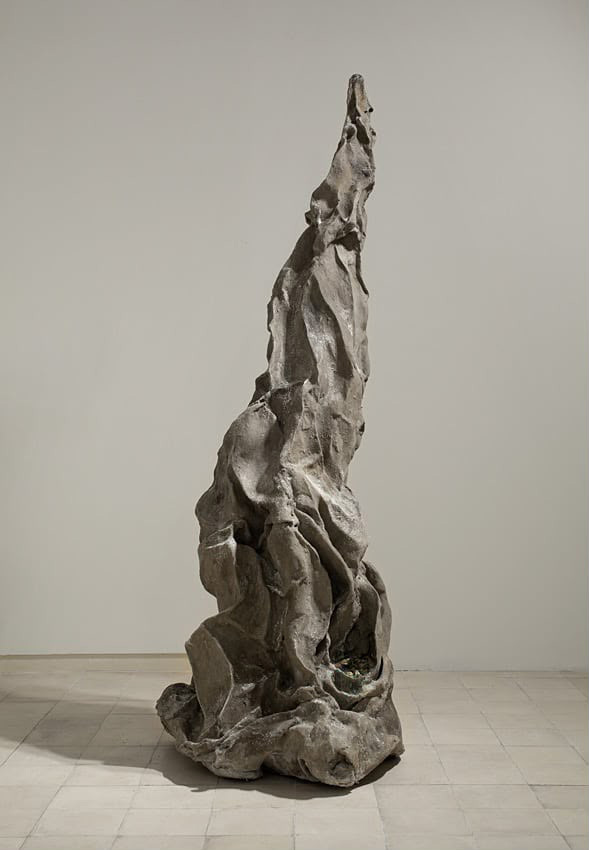
In Ezra Orion’s Breakthrough and Tomer Sapir’s Untitled (Terra Incognita), a language of forms ranges from orbital paths to archaeological finds, from relics of a world long gone to signs of one yet to come. Orion himself acted as an artist-prophet whose vision transcended the object while enshrining it as a locus of pilgrimage, as though it harbored a secret, a charge of magia.
The pull toward ideas of destiny and deliverance raises questions about what could be happening close to home, where messianism, cults of faith and a sense of collective mission are aestheticized and absorbed into the mood of the present.
Opening: Friday, November 6 2026, 11:00
Closing date: Saturday January 9 2027
Zimbalista Gallery
Shivat Zion 36, Tel Aviv
+972 (0)52 584 0569
info@zimbalista.com
Thu: 11:00 AM - 4:00 PM
Fri-Sat: 10:00 AM - 1:00 PM
Free Entry

Tomer Sapir, Something's Happened to Us, Father, 2017, video