 ENG
ENG ZIM
BALI
STA
BALI
STA
שלחו לנו הודעה וציינו את פרטיכם ופרטי הפנייה.
נחזור אליכם בהקדם האפשרי.
רח׳ שיבת ציון 36, תל אביב
+972 (0)52 584 0569
info@zimbalista.com
ימים ג׳-ה׳ 11:00-16:00
יום ו׳ 09:00-13:00
Ofra Zimbalista / Ella Littwitz

Eretz, Eretz, Āretz: hear the word: Ofra Zimbalista || Ella Littwitz
The exhibition " Eretz, Eretz, Āretz: hear the word" brings two Israeli artists from different generations into dialogue—Ofra Zimbalista (1939–2014) and Ella Littwitz (b. 1982). Despite the temporal gap separating them and their divergent artistic practices, they share a persistent and powerful fascination with earth, which is a sustained object of inquiry for both. Their encounter invites a stratified reading of the earth as the realm of time, memory, and identity.
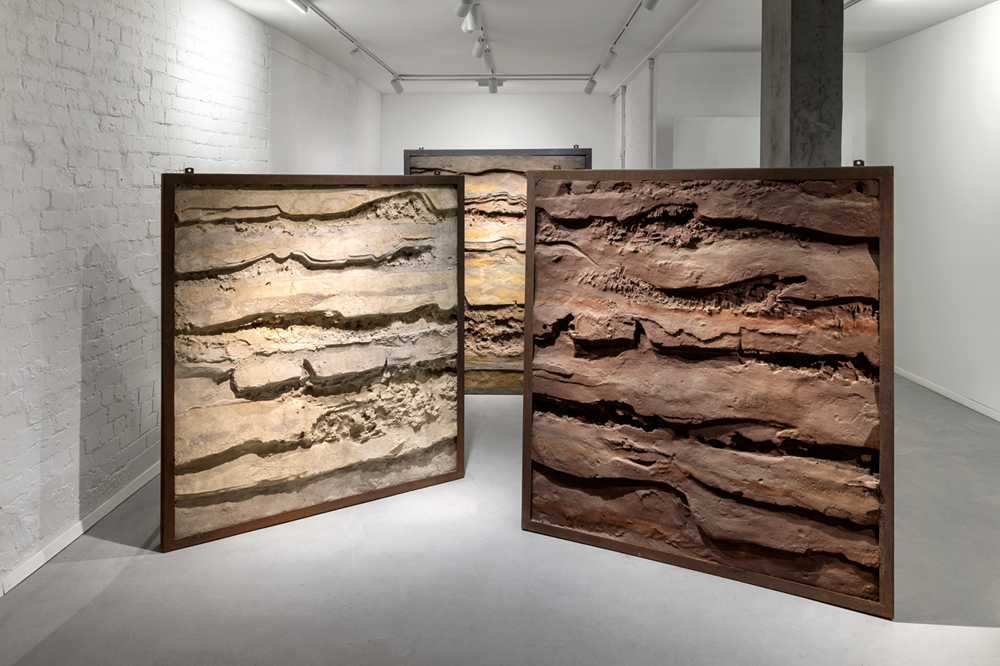
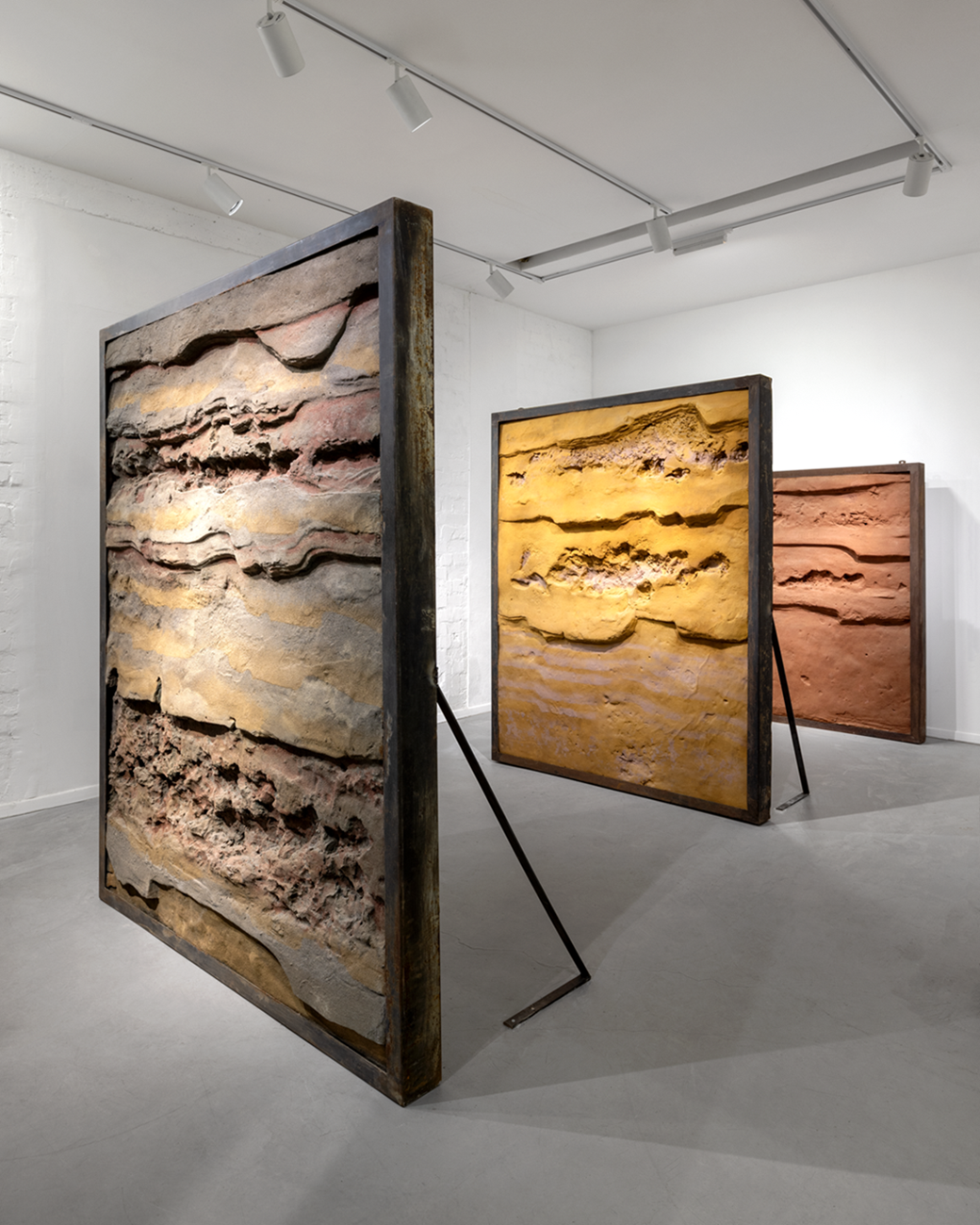
Relief was a dominant medium for Zimbalista during the 1980s and 1990s. In most of her works from those years, the earth is present as a marker of a symbolic-metaphorical space that resonates with death. Human figures are embedded amid the material layers, buried in the earth or struggling to free themselves from it. Alongside the reliefs, Zimbalista also created a singular, extraordinary series, Earth Cuts (1984), part of which is presented in the exhibition, which articulates a different approach to the earth.
Featuring strata of earth enclosed in iron frames, these large-scale reliefs possess a realistic character that recalls scientific practices of collecting soil samples. The processed surface preserves the organic quality of the earth, simulating long-term sedimentation and weathering. The works are silent witnesses to time's accumulation and the Earth's gradual formation.
At the same time, the works' life-size scale negates the research context: these are not soil samples from a stratigraphic collection, but rather peepholes into the bowels of the earth. Their monumental presence conceals power and great beauty, affirming the earth's resilience in the face of human transience. Although this series was preceded by playful explorations in which earth emerged as raw material, or as a lyrical-abstract image in other paintings and reliefs, Earth Cuts articulates a different stance, revealing a gaze of wonder and admiration for the sublime, timeless earth.
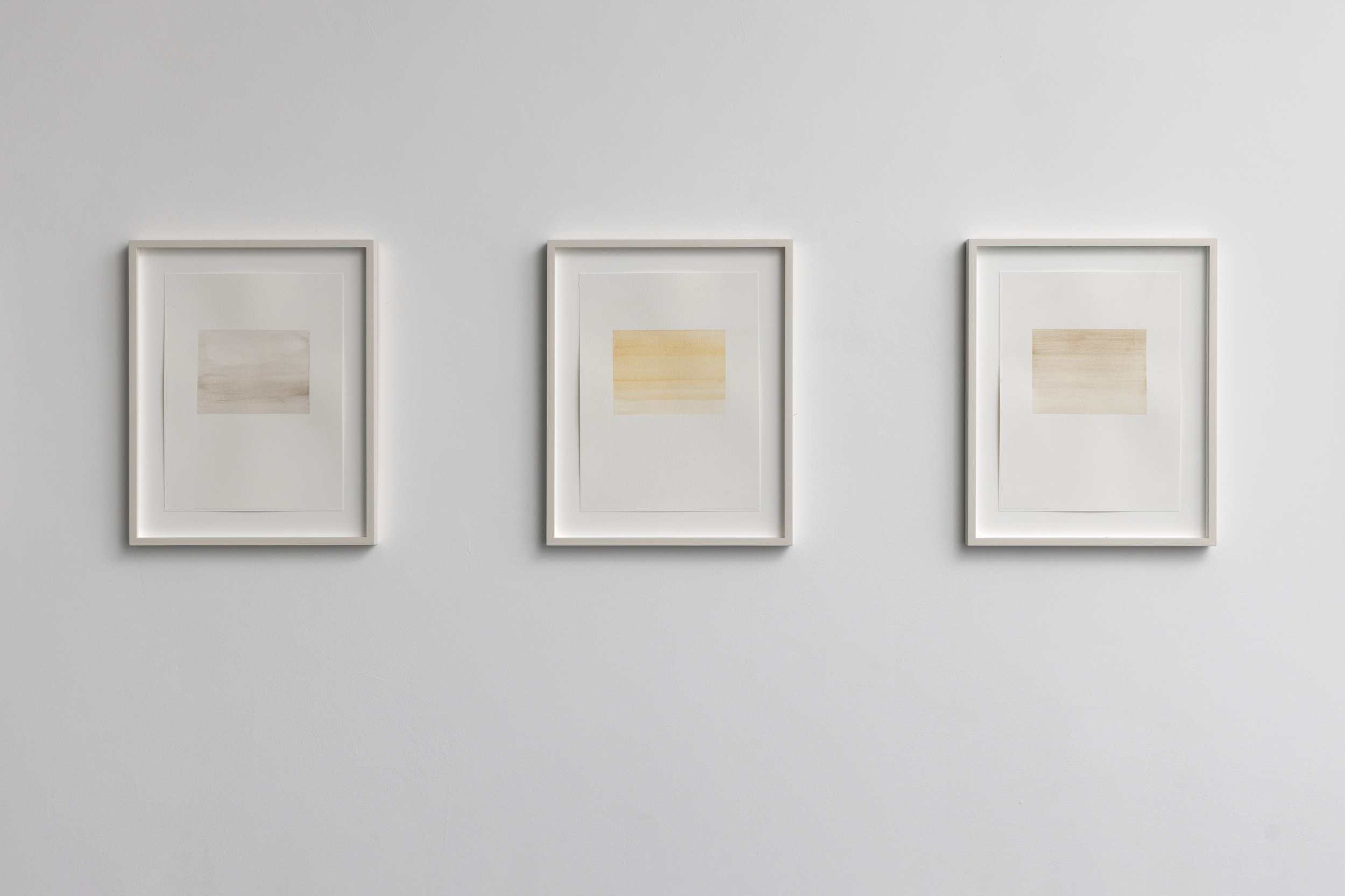
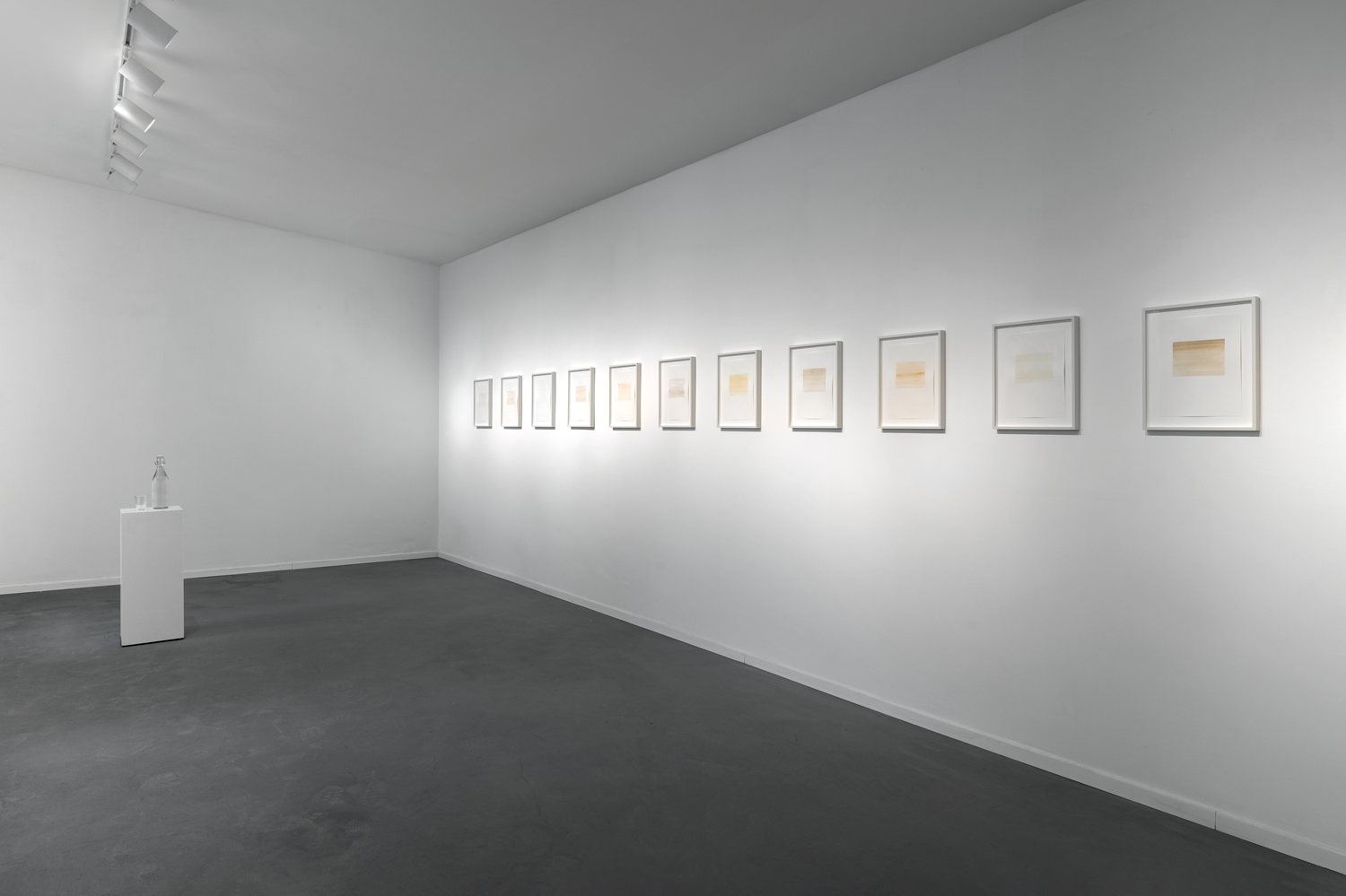
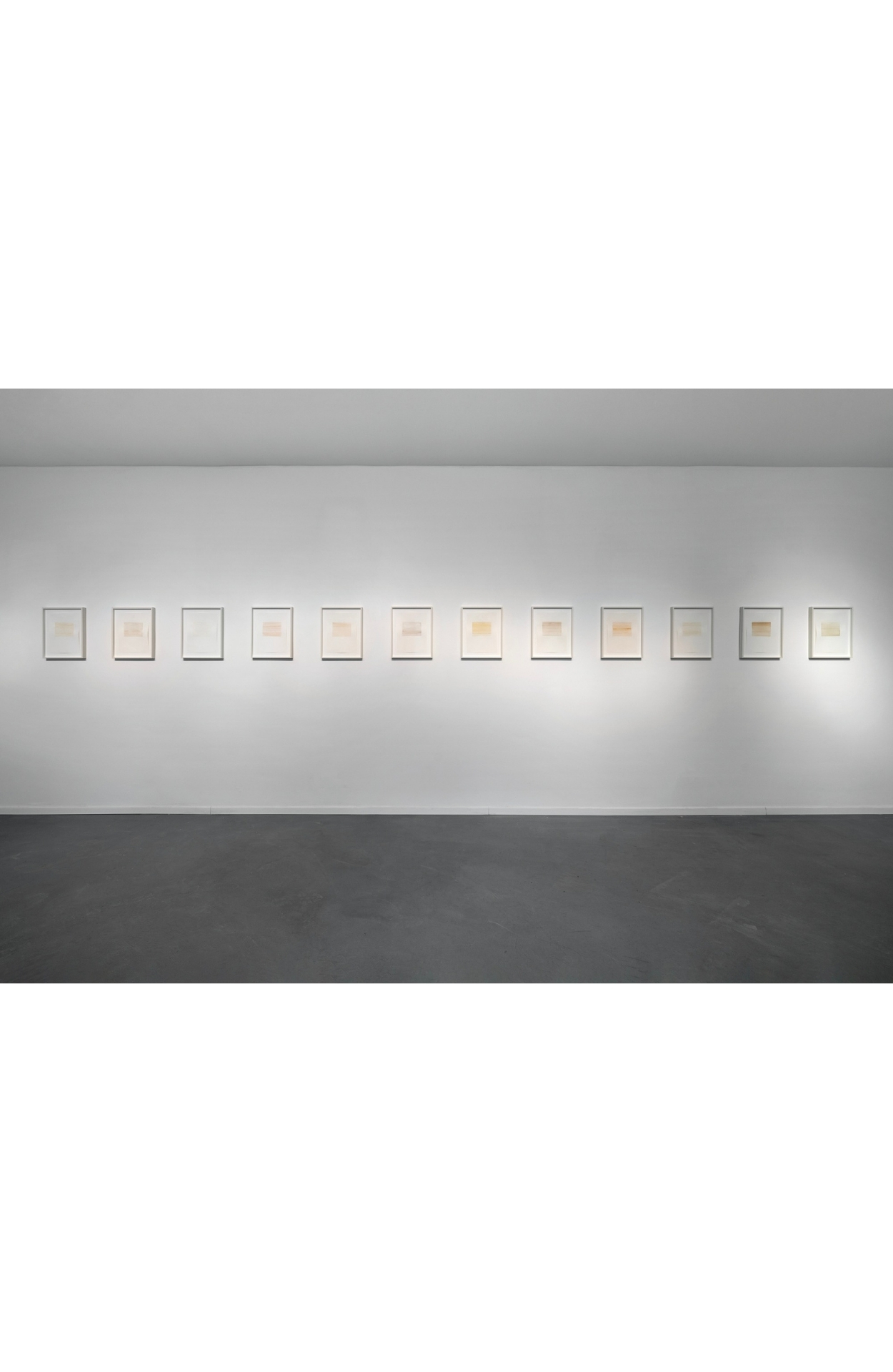
Set against Zimbalista's romantic approach, Ella Littwitz's new work, Eretz, Eretz, Aretz, Hear the Word (2026), whose title alludes to the biblical verse (Jeremiah 22:29) that gave its name to the current exhibition, observes and questions contemporary Israeli reality. The work grew from a deep sense of destabilization regarding the nature of the place over the last two years. In a futile search for objectivity, she began collecting soil samples, as if seeking to redefine the most fundamental substance from which the space is made. Littwitz reexamines her relationship with the earth, following the dual philosophy of Gaston Bachelard, who regarded earth as an element that allows for repose, dedication, and protection, a home and a refuge, and at the same time—as a charged, conflicted element of resistance, an arena of struggle.[1] Like a chronicle of a failure foretold, Littwitz attempts to separate tangible matter from its baggage (spirit, memory), and the political and cultural meanings projected onto it by human beings. She asks whether it is possible to strip land back to its soil. Employing a semi-scientific process, she repeats an act of dilution and purification to the point of radical reduction. The soil solution is applied with delicate strokes onto paper, forming uneven fields of color. The conscious decision to avoid identifying the geographical origin of the samples reinforces the artistic gesture, which seeks to neutralize the material of symbolic contexts and thus attempt to separate land from soil. An atmospheric composition of an imaginary mental horizon, composed of the most basic material element, unfolds across twelve delicate watercolors as a proposal to see a different landscape.
A glass bottle containing a transparent liquid is displayed next to the watercolors, flanked by a small glass. In a process similar to homeopathic remedy preparation, Littwitz distills a solution of home-soil.
After repeated cycles of potentization (dilution and succession), what remains, according to the homeopathic principle, is only the memory of the material. The transparent liquid carries the energetic imprint of the earth that has passed through it, as well as its emotional and conceptual baggage.
Homeopathy is founded on the principle of "like cures like" (Similia Similibus Curentur), whereby the substance that is a source of pain or disruption is also the one that contains the potential for cure. When the soil carries memories of struggle and revenge, however, the act becomes charged: healing and danger become inseparable. The glass placed next to the bottle is not only a serving vessel, but also an invitation to sip from the memory of the place's earth.
In his essay "Good Mother Earth: Imaginal or Literal,"[2] James Hillman suggests that Israel's tragedy lies in the attempt to "realize" the imagined land within a specific geography, resulting in an irreconcilable conflict. He rejects the romantic image of the earth as a "good mother," instead proposing an entity that is also autonomous, strong, and at times cruel. The failure to which Littwitz strives is the place that Hillman proposes as a cure: the fact that every substance is always both energy and spirit leaves room for imagination, and imagination is the elemental condition of spiritual life.
______________________________________________________________________________________
[1] See Gaston Bachelard's books dedicated to the element of earth, published in 1948 as part of his poetics of the elements: Earth and Reveries of Repose: An Essay on Images of Interiority and Earth and Reveries of Will: An Essay on the Imagination of Matter.
[2] James Hillman, "Good Mother Earth: Imaginal or Literal," in Mythic Figures (Uniform Edition of the Writings of James Hillman, Vol. 6) (Putnam, Conn.: Spring Publications, 2007), www.springpublications.com/ue_index.html?utm_source=chatgpt.com
Credit: Elad Sarig